
It’s easy to focus on personalities. It’s harder, but more important, to focus on records, structure and how municipal government actually operates.
Over the last several months, there has been a lot of discussion about city finances, transparency and administrative authority in the City of Margaret. As more records and historical information become available, I believe it is important to add context and explain how the city historically functioned and where we are working to improve it.
So, For many years before I took office, the City of Margaret operated without many of the formal budgeting systems, written procedures and internal financial controls that people now expect from a modern municipal government.
Like many small cities, a large portion of operational spending, recurring obligations and project expenditures were historically handled through administrative practice, broader project approvals and ongoing operational authority rather than detailed invoice-by-invoice approvals.
As someone who served on the council for five years before becoming mayor, I saw firsthand both the strengths and the weaknesses of that system. While the city continued to function and move projects forward, it was clear to me that Margaret needed stronger structure, clearer procedures and better long-term financial organization.
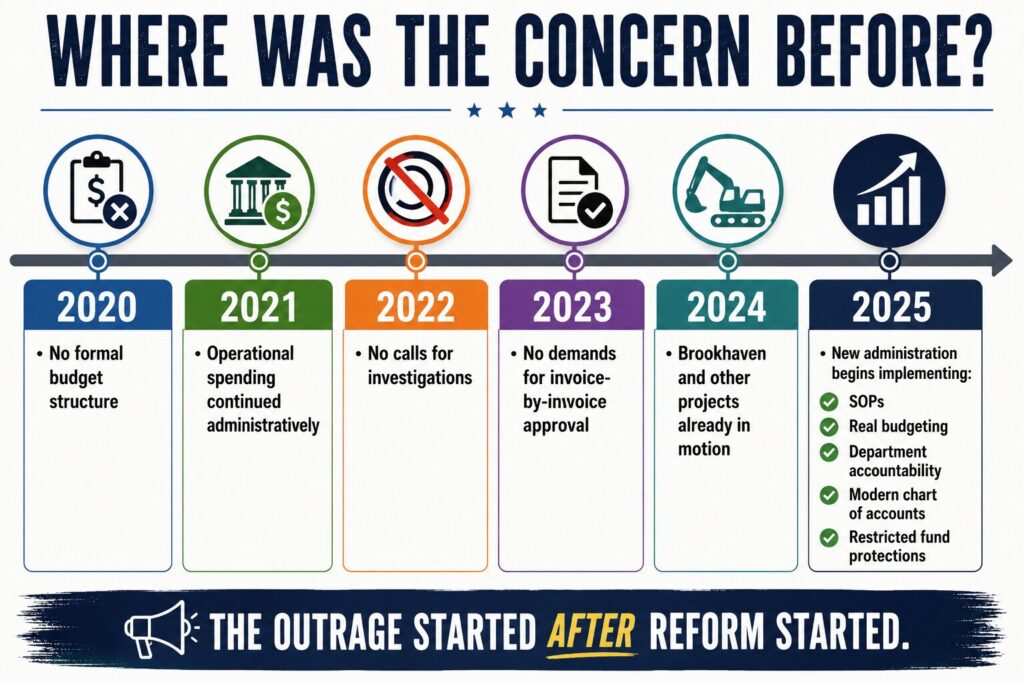
That was just the historical reality of how the city functioned.
And was one of the main reasons I ran for mayor. I believed the city needed to modernize those systems and create a stronger operational structure moving forward.
That is why one of the primary focuses of this administration has been:
• Creating written SOPs
• Implementing formal budgeting practices
• Establishing department accountability
• Building a modern chart of accounts
• Protecting restricted funds
• Improving transparency and financial reporting
Those systems largely did not exist when I took office, and we are continuing to build and improve them every day.
It is also important to understand that many projects and expenditures discussed publicly today originated before my administration took office.
That includes much of the Brookhaven Drive Project, the Dillard Park Pavilion and other operational obligations already underway at the time of transition.
I documented some of that history publicly here:
When concerns were raised publicly regarding spending and transparency, I responded by providing records, council minutes, grant history, project timelines and financial breakdowns using the city’s available records.
What those records showed is a historical lack of structure and documentation that made reconstruction of prior approvals and financial activity difficult.
Based on the records available at the time, millions of dollars in expenditures across prior years did not have clearly organized supporting approval records immediately tied to them. That shows that the city lacked the kind of organized systems and documentation standards that should have existed.
That was one of the core issues I was trying to highlight.
We are attempting to follow the records honestly, acknowledging weaknesses in prior systems and working to improve them moving forward.
I have also personally experienced the challenges created by the city’s historical recordkeeping issues.
While serving as a council member, I spent nearly seven months attempting to obtain basic operational and financial information from the prior administration and still did not receive everything requested.
I documented part of that process publicly here:
That experience is one of the reasons I place such a strong emphasis on documentation, reporting systems and operational transparency today.
At the same time, I think it is fair to ask an important question:
If spreadsheets, reports, council minutes, financial records, grant documents and project explanations were not sufficient, then what specifically was being requested beyond that?
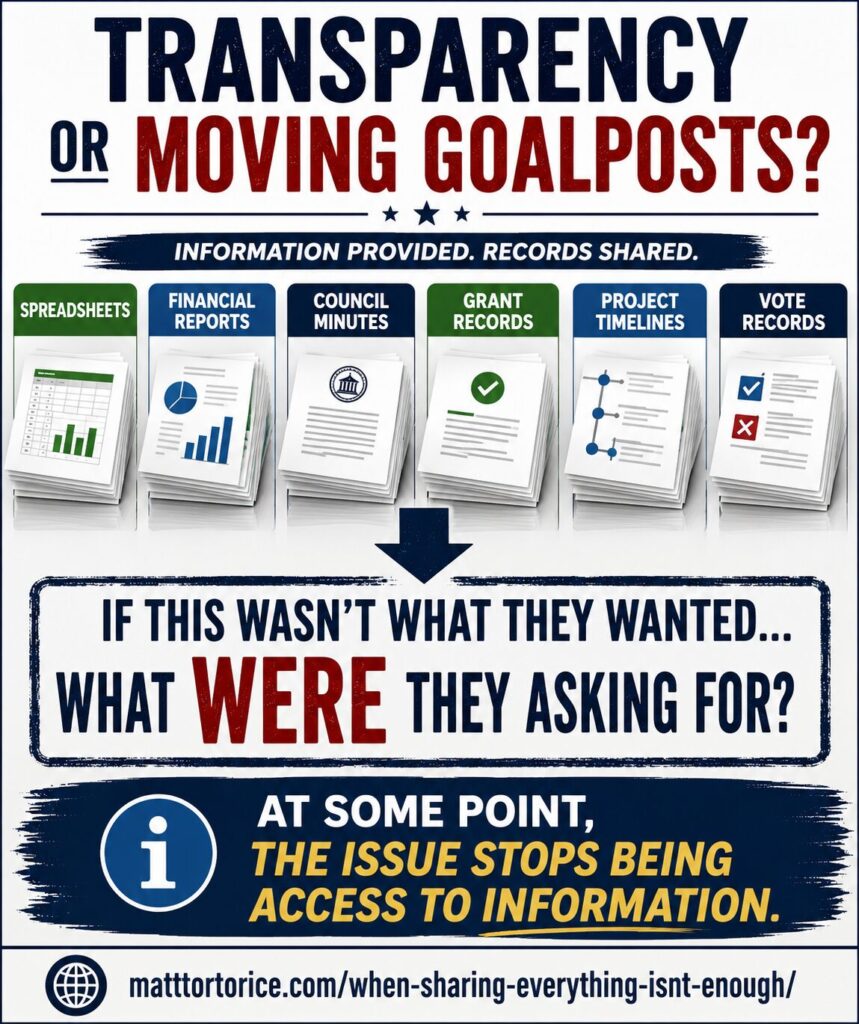
Because substantial documentation was provided repeatedly, including:
• Financial reports
• Spreadsheets
• Council minutes
• Grant documentation
• Vote records
• Project timelines
• Historical explanations
There is even a public example showing that much of the information later claimed to be unavailable had already been provided or was already in possession of those requesting it:
To me, this highlights a larger issue about expectations, structure and understanding how municipal administration actually functions.
The City of Margaret is not perfect. The systems inherited by this administration were far from perfect. But the answer is not political outrage or rewriting historical practices after the fact.
The answer is building stronger systems, improving accountability, improving documentation and continuing to modernize city operations responsibly.
The documented history shows:
• Years without formal budget structures
• Limited written procedures
• Administrative handling of recurring operational expenditures
• Projects approved outside detailed budget structures
• Longstanding obligations carried forward between administrations
It also shows a city now actively working to improve those systems.
Under Alabama Code §11-43-84, the mayor is required to provide the council with a written financial report at least once every six months for municipalities like Margaret.
That statute establishes a minimum reporting requirement. It does not require separate council approval for every operational expenditure, utility payment, fuel purchase or recurring obligation between meetings.
Municipal government must still function administratively on a daily basis.
Margaret deserves honest conversations grounded in records, context and practical governance, while continuing the work of building systems that better serve taxpayers, improve transparency and strengthen the city for the future.

Leave a Reply