
Over the past few weeks, I’ve talked with quite a lot of folks about the upcoming school millage, and I wanted to take a few minutes to explain it the way I understand it. My hope is that everyone – whether you support it or oppose it – can make an informed decision based on facts.
The first question I hear is: “How much of my property taxes actually go to schools?”
The answer surprises a lot of people.
When you pay your property taxes, the money does not all go to one place. Your bill is divided among the State of Alabama, St. Clair County, the municipality, and public schools. The proposed school millage would be one additional part of that overall bill.
Rather than using only a hypothetical example, here is an actual 2025 St. Clair County tax receipt from property located in the 36-mill Margaret–Odenville tax district.
| Current category | Millage | Amount on receipt |
| State | 6.5 | $162.76 |
| County | 11.0 | $275.44 |
| Schools | 13.5 | $338.04 |
| Municipal | 5.0 | $125.20 |
| Gross tax | 36.0 | $901.44 |
| Less exemption | — | ($48.00) |
| Total paid | — | $853.44 |
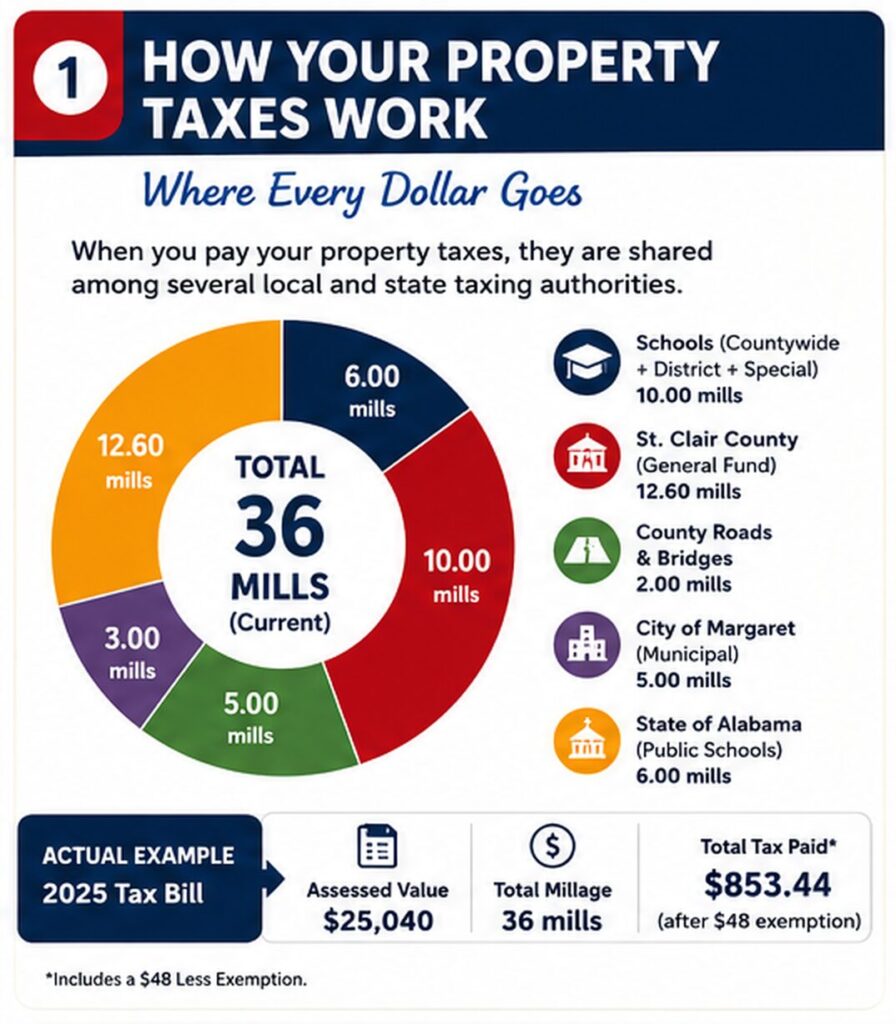
The receipt lists a property value of $250,400 and an assessed value of $25,040. The four current tax categories total $901.44, exactly 36 mills on the assessed value. After a $48 exemption, the amount actually paid was $853.44.
Of those 36 mills:
6.5 mills go to the State.
11 mills go to St. Clair County.
13.5 mills go to schools.
5 mills go to the municipality.
Of the current 36 mills, 13.5 mills – or $338.04 on this receipt – are shown under the school category.
What the Proposed 15 Mills Would Add
The proposal is to add 15 more mills for schools.
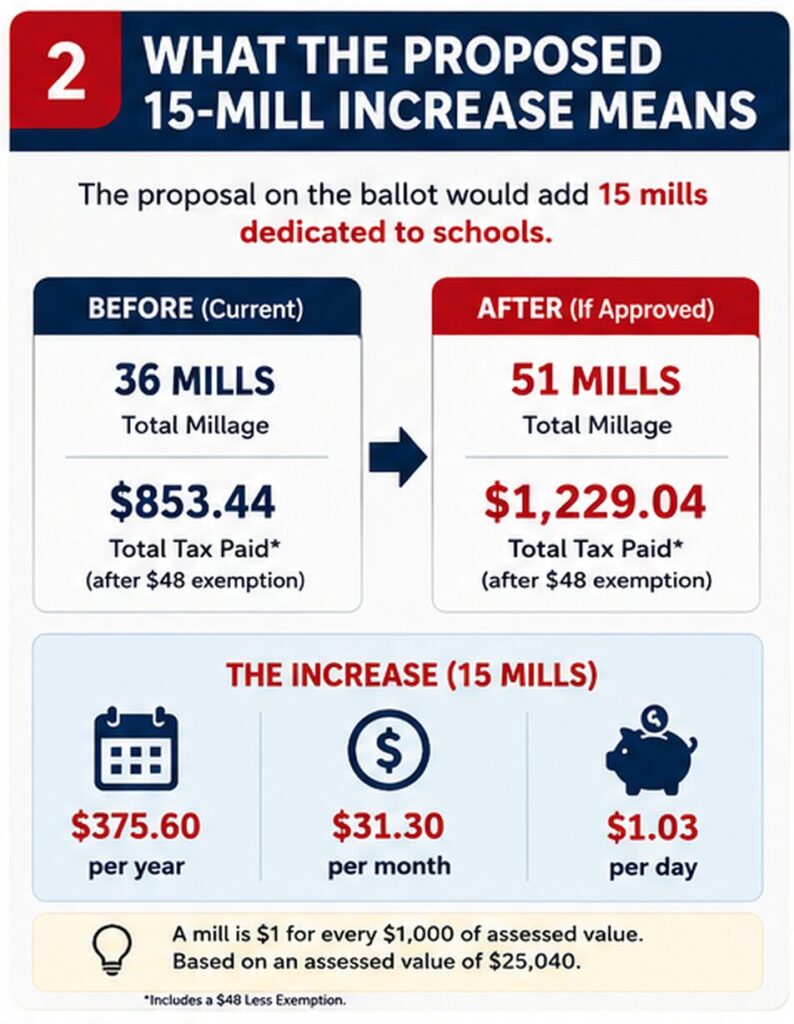
A mill is $1 of tax for every $1,000 of assessed value.
On this property, the assessed value is $25,040.
The calculation is:
$25,040 × 0.015 = $375.60
That means the proposed increase would add:
$375.60 per year
$31.30 per month
About $1.03 per day
The gross tax before the exemption would increase from $901.44 to $1,277.04.
The total millage would increase from 36 mills to 51 mills.
The school portion would increase from 13.5 mills to 28.5 mills. On this property, that would increase the school portion from $338.04 to $713.64.
Whether that additional amount is worth it is something every voter has to decide for themselves, but I believe everyone deserves to know the actual numbers before casting a vote.
What this property’s history shows
2019: Property value $156,360; tax paid $656.92
2020: Property value $163,440; tax paid $682.90
2021: Property value $165,060; tax paid $699.04
2022: Property value $190,480; tax paid $795.94
2023: Property value $216,480; tax paid $881.22
2024: Property value $230,200; tax paid $887.20
2025: Property value $250,400; tax paid $853.44
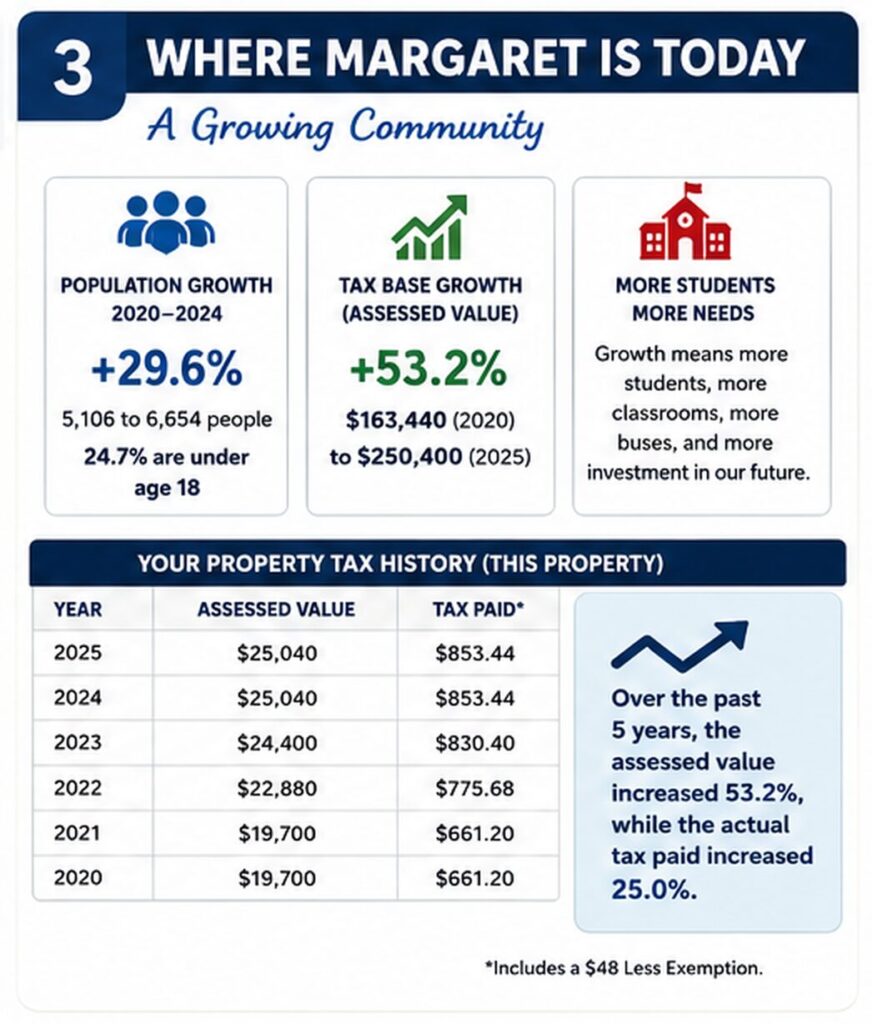
From 2020 through 2025, the listed property value increased from $163,440 to $250,400.
That is an increase of $86,960, or approximately 53.2%.
Over the same period, the tax actually paid increased from $682.90 to $853.44.
That is an increase of $170.54, or approximately 25.0%.
That equals average annual growth of about 8.9% in the listed property value and 4.6% in the amount paid over those five years. The tax did not increase in a straight line: it rose through 2024 and then declined by $33.76 in 2025 even though the listed value increased. The summary alone does not establish the reason for that decline.
Whether that additional amount is worth it is something every voter has to decide for themselves, but I believe everyone deserves to know the actual numbers before casting a vote.
I also understand why property taxes are a sensitive subject. Many homeowners have recently seen significant reassessments. Alabama’s current 7% cap generally limits annual increases in taxable assessed value for qualifying Class II and Class III real property, with statutory exceptions. That cap applies to assessment growth; it does not prevent a tax bill from increasing when a millage rate changes.
School Districts Do Not Stop at City Limits
Another thing that often gets overlooked is that school attendance zones and school tax districts do not always stop at city limits.
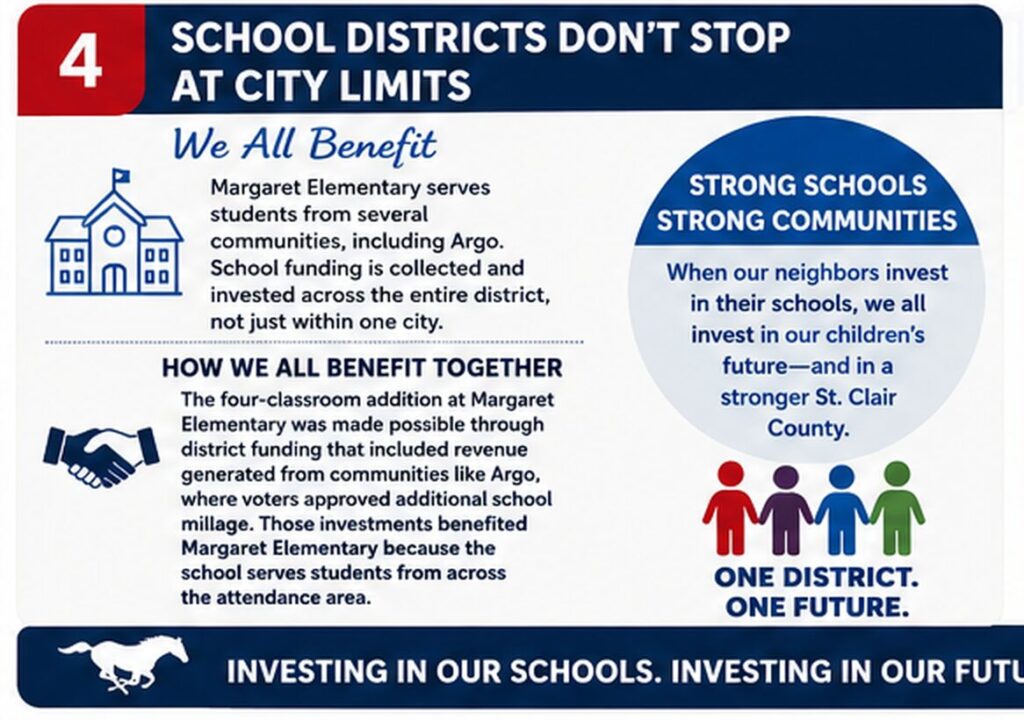
Margaret Elementary serves families from more than one community. Decisions about school funding, attendance zones, transportation, capacity, and future construction affect the entire area, not just one municipality. Students from Argo also attend Margaret Elementary as part of the same attendance area.
Because school funding is collected and invested across the entire school district, improvements at one school are often supported by taxpayers from multiple communities.
For example, the four-classroom addition at Margaret Elementary was made possible through district funding that included revenue generated from communities such as Argo, where voters approved additional school millage. Those investments benefited Margaret Elementary because the school serves students from across the attendance area.
That’s an important reminder that school systems don’t operate city by city—they operate as districts. When neighboring communities invest in their schools, those investments can benefit all of the students served by that district.
That is how school systems work. They serve districts and attendance areas, not only city boundaries.
For more than eight years, I’ve worked toward one goal continually: bringing another school to Margaret.
That work started long before I became Mayor – and even before I ran for council – through conversations with school board members, superintendents, legislators, and anyone else willing to listen. Today, for the first time in a long time, I genuinely believe Margaret has a seat at the table. Our incoming school board representative Greg Cobb has shown a willingness to discuss Margaret’s future, and I appreciate that.
Having a seat at the table is only the beginning.
We need to continue advocating for real, long-term solutions. That includes looking at expanding Margaret Elementary, adding another building, and ultimately making Margaret a K–6 campus that can better serve our growing community. With our eyes on that K – 12 goal.
Margaret has supported school millage proposals in prior elections, and our community continues to grow. Many of our newest neighbors moved here from communities that invest heavily in their public schools because they believe excellent schools strengthen neighborhoods, support property values, attract employers, and create opportunities for the next generation.
I truly believe Margaret Elementary is one of the gems of St. Clair County. I also believe we have the opportunity to become one of the premier school communities in the county – but that will not happen if we are not engaged.
Accountability Matters
I also understand that some people are not only concerned about the amount of the tax. They are concerned about what happens after the money is collected.
That is a fair concern.
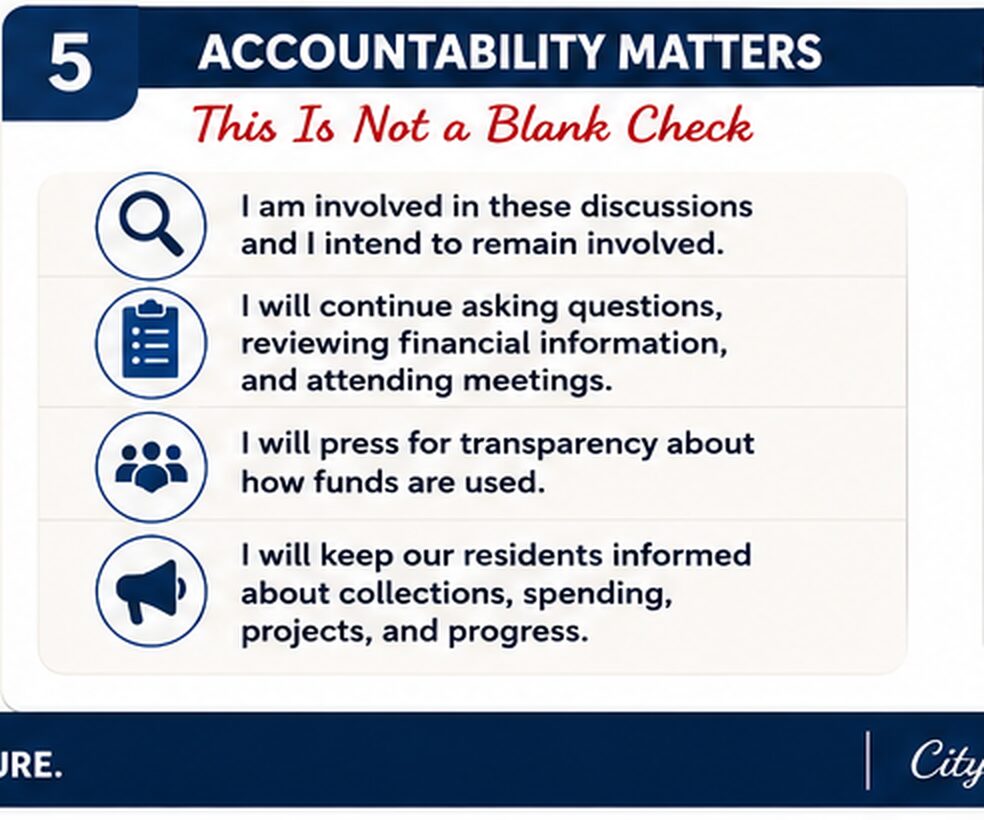
Supporting additional funding does not mean giving anyone a blank check.
If voters approve this millage, the public deserves clear information about how much money is collected, where it is spent, what projects are funded, and whether the commitments made to our communities are being honored.
I want everyone in Margaret to know that I am involved in these discussions, and I intend to remain involved.
This proposal has my attention, and so will the decisions that follow it.
I will continue asking questions, reviewing the available financial information, attending meetings, and pressing for transparency about how these funds are used.
I will also keep our residents informed about what I learn, including progress on school improvements, facility planning, enrollment needs, and any commitments involving Margaret.
If you are worried about whether the money will be handled responsibly, I understand that concern.
No public official or public body should be above accountability.
While I cannot personally control every decision made by the Board of Education, I can promise that I will be watching, asking questions, and speaking up for Margaret.
If the community is asked to make a larger investment in its schools, then the community has every right to expect measurable results, honest reporting, and responsible stewardship.
This is not a blank check. They have my attention, and I will keep you posted.
Whether you support this tax increase or oppose it, I encourage you to be part of the conversation. Attend meetings. Ask questions. Challenge assumptions. Learn the facts.
And if you are passionate about the future of education in Margaret, I hope you will consider taking that commitment one step further by serving on the St. Clair County Board of Education when the opportunity arises.
Margaret is one of the largest and fastest-growing communities in St. Clair County. We deserve a voice that reflects that growth, and I believe the time is coming when Margaret should have representation on the School Board.
This conversation is not really about politics.
It is about planning for the next 20 or 30 years.
Many of us may never personally benefit from the decisions we make today, but our children and grandchildren will.
Whatever happens on Election Day, I hope we can have this discussion respectfully, listen to one another, and keep our focus where it belongs.
The kids.


Leave a Reply